

foamed glass
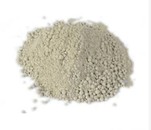
Also called porous glass or foam glass. It is an insulating glass composed of uniform pores with a porosity of over 90%. Due to its pore structure possessing the physical properties of borosilicate, it is used as a thermal insulation material with characteristics such as non permeability, non combustion, non deformation, non deterioration, and non contamination of food. Therefore, it is not only used as a non combustible thermal insulation material for indoor and outdoor environments, but also for food freezing fermentation and brewing equipment, liquid level measuring floats, etc. The manufacturing of foamed glass adopts powder sintering method, in which foaming agent is added to glass micro powder and mixed, heated and expanded in a hot container, and then annealed to obtain the finished product.
production principle
Foam glass was first invented by Corning, Pittsburgh, USA. It is an inorganic non-metallic glass material made of cullet, foaming agent, modification additive and foaming accelerator, which are finely crushed and evenly mixed, then melted, foamed and annealed at high temperature. It is composed of a large number of uniform bubble structures with a diameter of 1-2 millimeters. Among them, the sound absorbing foam glass has more than 50% of open cell bubbles, and the thermal insulation foam glass has more than 75% of closed cell bubbles, which can be adjusted by changing the production technical parameters according to the use requirements.
Due to its moisture-proof, fireproof, and anti-corrosion properties, as well as the long-term performance of glass materials, this new material is highly favored by users in harsh environments such as insulation, deep cold, underground, outdoor, flammable, humid, and chemical erosion. Widely used in wall insulation, petroleum, chemical, machine room noise reduction, highway sound-absorbing isolation walls, power, military products, etc., it is called a green and environmentally friendly insulation material by users.
According to various properties of foam glass, it can be used as thermal insulation material in various departments of construction engineering, as well as in shipbuilding, chemical industry, low temperature and high temperature technology. White and colored glass are also used as sound-absorbing and decorative materials. The waste in production - foam glass powder and scrap can also be used as filler for decorative light concrete and other purposes. According to different uses, foam glass products produced by corresponding processes can be divided into four categories, namely, thermal insulation foam glass, sound-absorbing decorative foam glass, decorative foam glass and granular foam glass.
performance metrics
The volume weight of foam glass insulation board is light, about 160kg/m; 2. The thermal conductivity is small, below 0.058 w/m * k, and the thermal conductivity is stable; 3. Non breathable; 4. Low water absorption rate, around 0.2%; 5 does not burn; 6. No mold or corrosion; 7. High strength, compressive strength ≥ 0.7Mpa, flexural strength ≥ 0.5Mpa; 8. Can resist acid corrosion (excluding hydrogen fluoride); 9 is non-toxic and does not contain CFC (chlorofluorocarbon carbon) or HCFCs (hydrochlorofluorocarbon); 10 Stable physical and chemical properties, stable size, easy to cut 3 foam glass insulation board external wall insulation system constitutes the basic structural layers of foam glass external wall insulation system from the inside to the outside should be: bonding layer, foam glass insulation layer, facing layer, finishing layer, of which the plastering layer is mainly used for leveling the wall base layer, to ensure that foam glass is firmly stuck on the wall, and the facing layer is mainly to protect the firmness of the strengthened insulation system and prevent water seepage. The thickness of foam glass insulation layer shall be calculated and determined according to the material and thickness of the outer wall base and the energy saving requirements of the outer wall. The foam glass external wall insulation structure can be combined with the external wall insulation structure of other organic materials as the insulation layer to prevent the external wall from burning.
Foamed Glass
Jun 04, 2026


Send Inquiry
Latest News



Contact Us
- Tel: +86-533-4188518
- Mob: +8613275332819
- E-mail: sdwenping@163.com
- Add: Room 711, NO.3, Yanhe Road, Boshan, Zibo, Shandong, China