

Production process of calcium silicate board
Raw materials
(1) Siliceous materials: quartz powder, diatomaceous earth, fly ash, etc.
(2) Calcium materials: hydrated lime powder, cement, calcium carbide mud, etc.
(3) Reinforced fibers: wood paper fibers, wollastonite, cotton fibers, etc.
(4) Main ingredients and formula: silicon powder+calcium powder+natural wood pulp fiber.
Production method
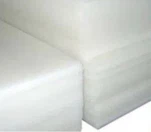
There are molding method, copying method, and slurry method. The common method is generally the extrusion method, in which the raw materials are fully stirred and matured according to the design ratio, and then extruded and formed by a roller machine at high temperature. The length dimension is 2440 mm, the width is 1220 mm, and the commonly used thickness is 4-30 mm.
Scope of application
1. Place of use
Commercial buildings: Business buildings, entertainment venues, shopping malls, hotels, industrial buildings; Factories, warehouses, and residential buildings; New residential buildings and renovated public places; Hospitals, theaters, and train stations.
2. Main purpose
It refers to industrial panels such as walls, ceilings, floors, furniture, road sound insulation, sound-absorbing barriers, ship compartments, and air ducts, as well as panels for sound-absorbing walls, sound-absorbing ceilings, poured walls, and composite wall panels.
construction method
(1) According to the design drawings and actual construction situation, the board is cut and drilled, and if necessary, chamfered on site. The two long sides of the fiber-reinforced calcium silicate board have been chamfered, but when the wall is higher than 2440 mm, the short side of the horizontal joint of the fiber-reinforced calcium silicate board must be chamfered on site to better handle the joint.
(2) Draw lines on the surface of fiber-reinforced calcium silicate board and mark the self tapping screw fixing points, while pre drilling concave holes (with a diameter 1 mm to 2 mm larger than the self tapping screw head and a depth of 1 mm to 2 mm). The self tapping screw is 15 mm away from the edge of the board, 50 mm away from the corner of the board, and the spacing between self tapping screws is 200 mm to 250 mm.
(3) When laying partition walls, longitudinal laying is generally used, that is, the long side of the board is fixed to the vertical keel; When connecting the boards, they should naturally approach each other and not be forcefully pressed into place; The joints on both sides of the wall should be staggered and not fall on the same keel.
(4) When fixing fiber-reinforced calcium silicate board, the board and keel should be pre drilled with a hole diameter 1 mm smaller than the diameter of the self tapping screw. The fiber-reinforced calcium silicate board should be fixed with self tapping screws, and should be fixed from the middle of the board to the periphery. All screw heads should sink 1 mm into the board surface.
(5) When installing the panels around doors and windows, the panel joints should not fall on the horizontal and vertical frame keel with the ground to avoid frequent opening and closing of doors and windows causing vibration and cracking of the panel joints.
Handing Information
During loading, unloading, and handling, collisions are not allowed. The bottom of the transportation vehicle must be flat, and fixed measures should be taken after loading to ensure that it does not shift or slide during transportation. When lifting or forking, the entire stack of boards must be stacked neatly to prevent steel ropes or forklift shovels from damaging the edges of the boards. When manually loading and unloading one by one, attention must be paid to preventing debris from getting caught between the boards. If not cleaned in time, the boards may crack or deform. When transporting boards, two people should hold both sides of the board vertically and it is strictly prohibited to lift it horizontally. The boards should be stacked on a flat ground or placed at the bottom with specialized wooden brackets. A small amount of scattered boards cannot stand upright against the wall. The boards should be stored in indoor warehouses, and if stored outdoors, they should be covered with tarpaulins.
Production Process Of Calcium Silicate Board
Jun 03, 2026



Send Inquiry
Latest News




Contact Us
- Tel: +86-533-4188518
- Mob: +8613275332819
- E-mail: sdwenping@163.com
- Add: Room 711, NO.3, Yanhe Road, Boshan, Zibo, Shandong, China