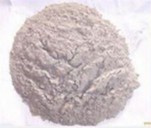
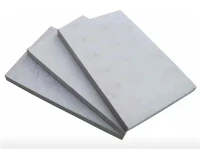
The wear resistance of refractory materials refers to their ability to resist the mechanical wear and tear of their surfaces caused by solid, liquid, and dusty airflow.
In many cases, the harm caused by mechanical wear on the surface of refractory materials is often severe. It is often the direct cause of the loss of refractory materials from their working surfaces. Sometimes, it is more harmful than chemical erosion, or the harm caused by chemical erosion is often exacerbated by mechanical action. The refractory lining and iron drainage ditch in the upper part of the blast furnace are often worn out due to insufficient wear resistance. The refractory materials in the coking chamber of coke ovens are also susceptible to wear and tear from coke. The furnace mouth, steel outlet, and other areas that are subject to air flow erosion and various flame melting liquids often suffer from poor wear resistance of the materials. Therefore, the wear resistance of refractory materials is an important property.
The wear resistance of refractory materials depends on the composition and structure of the material. When the material is a dense polycrystalline structure composed of a single crystal, its wear resistance mainly depends on the hardness of the mineral crystals that make up the material. High hardness and material wear resistance. When mineral crystals are non isotropic, the grain size is small and the material has high wear resistance. When the material is composed of multiple phases, its wear resistance is directly related to the bulk density or porosity of the material, as well as the bonding strength between each component. Therefore, at room temperature, the wear resistance of a certain refractory material is directly proportional to its compressive strength, and products with good sintering also have better wear resistance. The wear resistance of refractory products is related to temperature. Some materials, such as silicon aluminum refractory products, are generally believed to have lower wear resistance at a certain temperature (such as within the elastic range below 700-900 ℃), indicating that as the temperature increases, the wear resistance decreases with the increase of elastic modulus. When the temperature rises and reaches the maximum value of the elastic modulus, the wear resistance actually increases with the decrease of the elastic modulus. Aluminum silicate refractory products have even better wear resistance than those at room temperature between 1200-1350 ℃.
Contact me:Email:wp@cnjingganrefractory.com/sdwenping@163.com
TEL: 86-0533-4188518 / FAX: 86-0533-4188518
Rose:+86-13275332819(wechat/whatsapp number)