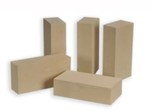
Light-burned dolomite is a highly reactive mineral material produced by calcining dolomite at temperatures below 1000 °C. Its chemical composition is CaMg(CO₃)₂, and the mixture of calcium oxide and magnesium oxide formed after calcination exhibits high chemical reactivity and a white appearance. This material possesses strong adhesion, binding capacity, and fire-resistant and thermal insulation properties. It is primarily used in the building materials industry as a component in cement, glass, ceramics, and other products. In the metallurgical industry, it serves as a slag-forming agent in steelmaking to regulate slag fluidity and is also used in the production of lining repair materials. In agriculture, calcined and modified dolomite is applied for soil pH regulation.
Preparation Process
Light-burned dolomite is produced from dolomite block ore (with a particle size of 20–80 mm) as raw material. The ore is crushed and then calcined in vertical or rotary kilns. The kiln system facilitates carbonate decomposition through controlled temperature gradients: MgCO₃ decomposes at 730–740 °C, and CaCO₃ decomposes at 910 °C. In industrial production, a single kiln can yield up to 300 tons of active lime per day, with an annual production capacity exceeding 1 million tons. In 2022, a company enhanced its production capacity through the renovation of a vertical kiln, which took approximately two months to complete.
Physical Properties
Light-burned dolomite has low density (approximately 1.45 g/cm³) and high porosity, with a strong tendency to absorb moisture and deliquesce. Storage requires moisture-proof measures. The particle size of the material is controlled to ≤170 mm, with over 90% meeting industrial-grade standards. Products that have not undergone high-temperature dead-burning treatment have lower mechanical strength, and direct brick formation is prone to pulverization and failure.
Application in the Building Materials Industry
When used as a cement additive, light-burned dolomite accelerates the hydration reaction. An addition ratio of up to 40% can improve early strength. In glass production, it enhances the gloss and mechanical strength of the final product, typically comprising 15–20% of the mixture. When reacted with brine to prepare magnesium oxychloride cement, the resulting cementitious material exhibits fireproof and moth-resistant properties, with a compressive strength exceeding 50 MPa. In exterior wall coatings, its pure white color reduces the need for pigments, lowering costs by approximately 12–15%.
Applications in the Metallurgical Industry
When used as a slag-forming agent in converter steelmaking, the addition of 20–30 kg of light-burned dolomite per ton of steel increases the MgO content in the slag to 6–10% and slows down the erosion rate of the furnace lining. The economic benefit of replacing magnesia ball technology is estimated at 3.15 yuan per ton of steel [3]. When mixed with tar pitch to produce refractory bricks, light-burned dolomite accounts for 55–65% of the mixture, increasing the load softening temperature of the product to 1650 °C.
Technical Parameter Standards
The chemical composition of light-burned dolomite must meet the following requirements: MgO ≥ 30%, CaO ≥ 40%, SiO₂ ≤ 5%, S ≤ 0.05%, and P ≤ 0.05%. Activity tests show that under standard conditions (180 seconds), the hydration reaction completion rate must exceed 85%. Particle size classifications include 0–1 mm powder, 1–5 mm granules, and 5–10 mm aggregates, catering to different industrial applications. The moisture content of the product at the time of shipment must be controlled at ≤ 1.5% to prevent clumping during transportation.
Do you want to find a professional supplier of refractory products?
Do you want to find a stable and credible supplier?
Then please contact with us.
Contact me:Email:wp@cnjingganrefractory.com/sdwenping@163.com
TEL: 86-0533-4188518 / FAX: 86-0533-4188518
+86-18244005370(wechat/whatsapp number)