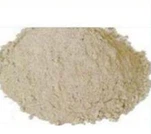
Cupels are key porous refractory vessels used in fire assay for blowing lead (or bismuth) clasps. Their main function is to absorb lead oxide (or bismuth oxide), thereby achieving the separation of precious metals (such as gold and silver) from impurities.
Main types and characteristics
Cement ash dish
Material: 400-500 grade Portland cement+8-12% water compression.
Features: Hard, not easy to crack, but with significant loss of precious metals and low cost
Bone ash - cement ash dish
Materials: Beef and sheep ashes (mainly composed of calcium phosphate) are mixed and pressed with cement in proportions (such as 3:7, 4:6, 5:5).
Features: The ash blowing temperature and endpoint are easy to determine, the blending is pure, suitable for secondary assay, and the analysis results are more reliable; Suitable for complex samples (such as copper lead electrolytic anode mud)
Magnesia ash dish (plate-shaped ash dish)
Material: Magnesium oxide (MgO) content is about 85% to 96%, often added with a small amount of cement or flux.
Features: minimal loss of precious metals, smooth surface, high mechanical strength, and good thermal shock resistance; But the ability of ash blowing to remove impurities is weak, the particles are prone to impurities, and the endpoint is difficult to determine
Application scenarios
Widely used for composition analysis of ores and concentrates such as gold, silver, copper, lead, etc
In coal quality analysis, it is also used as an ash dish (such as GB/T 212-2008 standard), but it is made of porcelain or quartz material and is used to determine ash content
Purchase suggestions
High precision and high reliability requirements (such as national standard testing): Priority should be given to using bone ash cement ash dishes (1:1 or 1:3)
Large scale and high recovery rate requirements (such as advanced laboratories in Europe and America): magnesium sand ash dishes can be selected, but they need to be calibrated using the volumetric method
Ordinary testing or cost sensitive scenarios: Cement ash dishes may be considered, but higher losses must be accepted
Fire assay process
Fire assay is a process used to determine the content of precious metals such as gold and silver in ores and other materials. The process includes the following steps:
1. Sample preparation: Grind and grind the ore sample into fine powder, then divide and mix evenly to ensure sample representativeness.
2. Flux configuration: Flux is configured according to the acid-base properties of the sample. Flux is a chemical substance that helps separate precious metals from other impurities in the sample.
3. Sample melting: Mix the sample and flux evenly and place them in a crucible, then melt them at high temperature in the sample melting furnace. During this process, precious metals combine with lead oxide to form an alloy, also known as a lead buckle.
4. Ash blowing: Put the alloy into a bone ash dish or magnesia ash dish, heat it at high temperature in the ash blowing furnace, so that the lead oxide in the alloy is absorbed by the ash dish, leaving behind precious metal particles.
5. Gold separation: Heat precious metal particles in a mixture of nitric acid and hydrochloric acid to dissolve silver and separate gold.
6. Weighing: Finally, by weighing the final weight of gold, calculate the gold and silver content in the sample separately.
Overall, fire assay is an accurate and time tested method for determining the gold and silver content in ore samples. This process requires specialized equipment and training, and is still widely used in laboratories and the mining industry.