

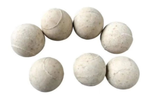
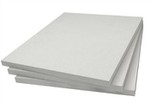
Plate shaped ash dishes are advanced fire assay gold assay instruments abroad. Advanced gold testing institutions in Europe and America, as well as precious metal testing institutions in Hong Kong, Macau, Taiwan, Singapore, and other regions, all use this plate-shaped ash dish. The main component of the plate-shaped ash dish is magnesium sand.
The fire assay method for determining gold and silver is an ancient and classic chemical analysis method. Due to its large sample size, strong representativeness, and wide applicability, the analysis results are stable and authentic. Especially for samples with complex associated elements, the fire assay weight method is generally used for direct determination, or combined with other chemical and instrumental methods through fire assay. The current national or industry standards for gold and silver analysis in China (such as copper, lead, gold, silver and other concentrates; crude copper, crude lead and their electrolytic anode mud, etc.) all use fire assay method. The ash dishes used in the standard mainly include four materials and ratios: ash cement ash dishes (1+1), (1+3); magnesia cement ash dishes (1+1), (85+15), etc. Will different materials and ratios of ash dishes affect the analysis results? How much error will it cause? What material and ratio of ash dish is best used to make the analysis results more realistic and reliable?
When selecting the material and ratio of the ash tray, not only should the recovery rate of pure gold and silver during the ash blowing process be considered, but also the absorption capacity and effect of the ash tray on non precious metal impurities in the lead buckle in actual sample testing (i.e. whether the composite particles obtained by ash blowing can meet the corresponding purity requirements for analysis accuracy). Otherwise, the recovery rate will be falsely high, resulting in inaccurate and inaccurate analysis results.
Although the recovery rate of magnesia ash dishes is relatively high, there are problems such as difficult removal of adhesive substances at the bottom of the particles, difficulty in determining and mastering the ash blowing temperature and endpoint, and poor reproducibility of the measurement results with significant range. More importantly, the ash blowing and impurity removal performance is poor, especially for copper and lead electrolytic anode mud samples with a high content of heavy metal elements and silver, which often result in impure particle size. If the weight method is directly used for determination, the analysis results of silver will inevitably be higher in the system; If the capacity method is used for calibration, it will increase operational procedures and procedures, while also introducing new analytical errors. In addition, due to the fact that magnesia itself is a refractory material with a high melting point, it is difficult to conduct two assays, so only pure silver recovery rate can be used for indirect correction. Although this correction method is relatively simple, it is not objective and scientific enough, which can easily lead to the inaccuracy of the analysis results.
Except for a relatively lower recovery rate, bone ash cement dishes are superior to magnesia sand dishes in all other aspects. For example, the ash blowing temperature and endpoint are easy to determine and master (the best ash blowing temperature is when feather shaped lead oxide appears around the ash dish, and the "flash point" of the ash blowing endpoint is much more obvious than that of the magnesia ash dish). The mixed particles obtained after ash blowing are relatively pure, and are not easily broken when knocked into thin sheets. Moreover, the ash dish itself is conducive to secondary assay, and the recovery and correction are objective and true. The analysis results are relatively reliable. We also conducted a series of pure silver recovery rate tests to show that the higher the silver content, the greater the ash blowing loss and the higher the recovery rate. Generally, for pure silver weighing 50-200 mg, the recovery rate of the first assay is 96% -97.5%, while the total recovery rate after the second assay can reach 99.5% -99.8%. Therefore, after secondary testing, it can fully meet the requirements of national or industry standards for analysis errors. In addition, due to the various heavy metal impurities present in the sample that have a certain affinity for lead and silver, both lead clasts and aggregates cannot be very pure, especially when we repeatedly recover slag and ash dishes, which increases the probability of introducing impurity elements and leads to higher analysis results.
It is recommended to use ash dishes made of bone ash cement (1+1) or (1+3) for the ash blowing of copper and lead electrolytic anode mud samples with complex composition, high content of heavy metal elements, and high silver grade. The correction of analysis results should be directly compensated by secondary assay. If magnesium sand ash dishes are used for ash blowing, the volumetric method must be used for calibration to ensure the reliability of silver analysis results. This article opposes the use of magnesia ash dish ash blowing and directly uses pure silver recovery rate as a correction. While using the weight method to determine the silver content in copper and lead electrolytic anode mud, it also does not support the practice of repeated recovery correction through multiple assay tests, or adding pure silver after secondary assay recovery
Plate Shaped Ash Dishes
Mar 26, 2026




Send Inquiry
Latest News




Contact Us
- Tel: +86-533-4188518
- Mob: +8613275332819
- E-mail: sdwenping@163.com
- Add: Room 711, NO.3, Yanhe Road, Boshan, Zibo, Shandong, China