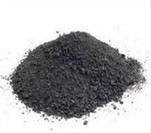
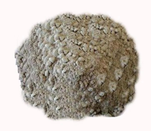
一, Types of refractory castables
1. According to the characteristics: high-strength wear-resistant castable, high-temperature resistant castable, low cement castable, steel fiber castable, acid resistant and heat-resistant castable, etc;
2. According to refractory materials: Clay castable, high aluminum castable, siliceous castable, mullite castable, corundum castable, silicon carbide castable, etc;
3. According to the applicable industrial kiln environment, it can be divided into: aluminum silicon carbide castable for the iron tap hole of the ladle, aluminum magnesium spinel castable for the ladle, etc;
4. According to the density: light castable and heavy castable;
5. According to the composition of binder, it can be divided into organic binder castable and inorganic binder castable, such as resin binder castable and cement binder castable;
6. According to chemical properties: acid resistant castable, neutral castable, alkali resistant castable.
二,Common construction methods of refractory castable
1. Pouring construction method
1) Inspection: check whether the mold is well supported, whether there is any gap or deviation, clean up the sundries in the mold, whether the anchor (heat-resistant stainless steel palladium nail) is firmly welded, and the anchor surface is coated with paint or wrapped with plastic bags to buffer the expansion force after heating.
2) Pouring: pour the mixed castable into the mold, insert the vibrator to vibrate, move the vibrator evenly, and pull it out slowly.
3) . if the pouring area is too large, it can be poured in layers and parts, and it can be cross operated. The wall is poured in layers, each time about 900mm, the top of the furnace is split and poured, and then lifted.
4) . maintenance and formwork removal: the formwork can be removed after the ambient temperature is more than 20 ℃ for 4h, < 20 ℃ for 6-7h, and can be repaired if the local edges and corners are damaged. (the specific removal time depends on the site conditions).
2. Daubing construction method
1) Firstly, check whether the anchor (heat-resistant stainless steel palladium nail) is firmly welded, and the anchor surface is coated with paint or wrapped with plastic bags to buffer the expansion force after heating.
2) . apply the mixed castable directly on the working surface by manual application.
3) . the working face shall be coated continuously from bottom to top in layers, with the height of each layer of about 900mm and the thickness of each coating of about 80mm. When the thickness reaches the required size, the construction surface shall be trowelled with tools.
4) . the top of the construction area shall be coated continuously in sections, and the two expansion joints shall be one section, 30-50mm each time. When the thickness reaches the required size, the construction surface shall be trowelled with tools.
5) For the insulation lining of large-diameter horizontal pipeline, it is advisable to construct the lining section by section, and then erect the connection method. When the pipeline is constructed section by section, the pipeline shall be placed horizontally, the lower semicircle lining layer shall be applied first, and the other semicircle lining layer shall be applied 180 ° after natural curing for 4? 8h, and the joint treatment shall be done after the pipeline is connected.
3. Spraying construction method
1) Firstly, weld metal palladium nail or metal mesh (heat-resistant stainless steel) on the furnace shell.
2) . put the spraying paint into the sprayer, use compressed air (pressure 0, 10-0, 15MPa) to send the mixture to the nozzle, add proper amount of water or chemical bond to mix with the mixture, and spray to the construction surface.
3) . the nozzle outlet shall be perpendicular to the construction surface, with a distance of 1-1 and 5m. The spraying shall be carried out continuously, and the thickness of each spraying shall be less than 200mm.
4) . if the spraying layer of the construction surface is too thick, it shall be sprayed layer by layer, but it must be carried out after the previous layer has sufficient strength. After spraying, the working surface shall be plastered in time and the rebound material shall be cleaned.