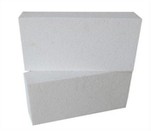
In order to prevent the use effect of high alumina refractory brick from being affected, the antifouling work should be done well during production, transportation and stacking. Wax coating or other antifouling technologies can be used for antifouling. If the high alumina refractory brick is corroded and damaged, its value will be greatly reduced. Generally, the high temperature or mechanical force will damage the refractory brick. The following is a detailed introduction.
一,How to prevent pollution of high alumina refractory brick
1,Wax, organic coating and hydrophobic surfactant antifouling technology: wax and organic coating are common antifouling agents on the surface of high alumina refractory brick, but the effect has been unsatisfactory. Although waxing can prevent pollution, the surface tension of wax is large. In addition, wax is a kind of coating material. An airtight sealant.
2,Fluorine containing low surface energy antifouling technology: fluorine-containing compounds have very low surface energy, and the surface tension of perfluoroalkanes is as low as 10 nm. The contact angle ratio with organosilicon is 110:101, so it has better antifouling and anti staining ability. Although fluorine-containing compounds have good antifouling properties, they are expensive. In addition, it is not very mature in the field of anti fouling technology of high alumina brick, so fluorine compound anti fouling technology is rarely used at present.
3,Organosilicon antifouling technology: the surface energy of high aluminum brick surface treatment agent is a very important factor in the antifouling performance. Low surface energy can prevent the adsorption of dust, microorganisms, water-based substances, particles, etc. It is easy to desorb under the action of external force. Organosilicon has a low surface tension, which can be as low as 21-22m nm. It is an ideal and widely used waterproof and antifouling agent on the surface of high alumina brick.
二,What are the causes of corrosion of high alumina refractory brick
1. It is the irregular crack of refractory lining caused by the thermal stress and mechanical stress of furnace, which leads to the rapid damage of refractory brick lining.
2. The second is called structural peeling, which is caused by the penetration of slag and the temperature fluctuation on the heating surface. Therefore, a special metamorphic structure layer is formed, and cracks parallel to the heating surface are produced at the interface between the original layer and the metamorphic layer, which makes the lining of high alumina refractory brick peeled and damaged.
3. The third is called melt flow, which is caused by the reaction with molten steel, molten iron and slag to produce substances with low melting point, and the resulting melt flow or wear is mainly caused by the formation of liquid phase and the erosion of the surface layer.
In addition, the cracks caused by the shrinkage of the high alumina brick lining and the expansion or opening of the joints caused by the shrinkage of the refractory products in the use of the brick lining are also the main reasons for the rapid local damage of the lining.