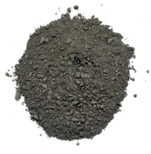
Fire resistant ramming material is made up of high proportion of granular and powdery materials, low proportion of binders and other groups, and even all of them are composed of granular and powdery materials, which need to be constructed by strong ramming.
As the ramming material is mainly used in the direct contact with the molten material, it is required that the granular and powdery materials must have high volume stability, compactness and corrosion resistance, and those used in induction furnace should also have insulation.
The choice of binder for ramming materials should be appropriate, some do not need binders, some only add a small amount of flux. Acid ramming materials commonly used sodium silicate, ethyl silicate, silica gel and other binders. Among them, the dry ramming material mostly uses borate; the alkaline ramming material commonly uses magnesium chloride salt and sulfate; also often uses the organic matter with high carbon content which can form carbon binding at high temperature and temporary binder. The dry ramming material is added with appropriate amount of flux containing iron. Glauber's salt is commonly used in chrome ramming materials.
Compared with other unshaped refractories of the same kind, ramming material is loose in dry or semi dry state. Dense structure can be obtained by strong ramming. Only when the ramming material is heated to sintering temperature, can the bonding body have strength.
After the ramming material is formed, different heating methods can be adopted to promote its hardening or sintering according to the hardening characteristics of the mixture. If it contains inorganic chemical binders, it can be removed and baked after self hardening to a certain strength; if it contains thermoplastic carbon binder, it can be demoulded after cooling and has considerable strength, and it should be heated quickly to make it coking before use; and the binder not containing hardening at room temperature is often sintered with the mold after tamping.