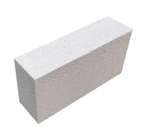
Silicon Carbide Mullite Bricks for Cement Kilns
Silicon carbide mullite bricks are high-performance refractory materials specifically designed for high-temperature, corrosive, and thermal shock environments in cement kilns.
1. Material Composition
Silicon carbide (SiC): Typically comprising 15–40%, it provides high thermal conductivity, excellent thermal shock resistance, and wear resistance.
Mullite (3Al₂O₃·2SiO₂): Acts as the matrix phase, providing high-temperature strength and chemical stability.
Binding phase: May include clay, alumina, or silica micro powder to enhance sintering performance and structural density.
2. Performance Characteristics
High-temperature resistance: Withstands temperatures exceeding 1500°C, making it suitable for high-temperature zones such as the transition zone and firing zone in cement kilns.
Thermal shock resistance: The low thermal expansion coefficient of SiC combined with mullite's toughness ensures superior resistance to rapid heating and cooling.
Wear resistance: The high hardness of SiC resists abrasion from kiln materials and gas flow.
Chemical resistance: Highly resistant to alkali and sulfur, common corrosive agents in cement kilns.
Thermal conductivity: The high thermal conductivity of SiC promotes uniform heat distribution, reducing thermal stress.
3. Application Areas
Transition zone: Its exceptional thermal shock resistance is critical for handling frequent temperature fluctuations.
Firing zone: Resists chemical attack from clinker melt and extreme heat.
Cooling zone: Offers high wear and thermal fatigue resistance.
4. Key Considerations
Higher cost: Due to the expense of SiC raw materials, though its long service life reduces overall costs.
Installation requirements: Must strictly follow expansion joint designs to prevent thermal stress buildup.
Replacement trend: Under environmental regulations, it is increasingly replacing traditional magnesia-chrome bricks (to avoid chromium pollution).
Silicon Carbide Mullite Bricks for Cement Kilns