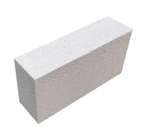
Foam ceramic insulation board is a closed cell ceramic material made mainly from clay tailings, ceramic fragments, river silt, etc., and baked at high temperatures above 1200 ℃. It has high porosity, lightweight properties that can be held by two fingers, and a higher heat resistance coefficient than traditional materials. Its core performance includes A1 level fire resistance, low thermal conductivity (0.06~0.10W/(m · K)), low water absorption rate, and strong weather resistance. It can adapt to extreme environments from -50 ℃ to 200 ℃ and has a service life of over 50 years.
This material achieves green production through the utilization of solid waste raw materials (with a utilization rate of 85%), mainly used for building exterior wall insulation and fire isolation belts, with a bonding strength of over 5MPa with cement mortar. The construction adopts adhesive technology combined with interface agent and anchor fixation, and some products have been modified to have waterproof and sound-absorbing functions.

The product is suitable for building exterior wall insulation, fire isolation belts, building self insulation cold and hot bridge treatment, etc. The product has fire resistance and flame retardancy, small deformation coefficient, aging resistance, stable performance, good ecological and environmental protection, good compatibility with the wall base and plaster layer, good safety and stability, and can be used for the same life as the building. More importantly, the material has a fire rating of A1, overcoming the fatal weakness of organic materials being afraid of open flames and prone to aging, filling the domestic gap in inorganic insulation materials for buildings.
Performance Introduction
1. Low thermal conductivity with a thermal conductivity of 0.06~0.10W/(MK), comparable to insulation mortar; Good thermal insulation performance, can serve as insulation materials for exterior wall insulation systems and exterior wall decorative panels for European style buildings.
2. Made by high-temperature calcination above 1200 ℃, non combustible and fire-resistant, with A1 level combustion performance and fire-resistant properties similar to power plant refractory bricks. It is an ideal material for external insulation systems and fire-resistant isolation belts with fire protection requirements.
3. Inorganic insulation materials made of anti-aging ceramics have good durability, do not age, and have the same lifespan as buildings, which is unparalleled by conventional organic insulation materials.
4. Good compatibility with cement mortar, concrete, etc., reliable bonding, similar expansion coefficient, and traditional ceramic building materials fired at high temperatures. It does not crack, deform, or shrink under thermal expansion and contraction. After double-sided coating with inorganic interface agent, the tensile bonding strength with cement mortar can reach over 5MPa.
5. Low water absorption rate, extremely low water absorption rate, can bond well with cement mortar, decorative tiles, etc. External decorative tiles are safe and reliable, not limited by building height, etc.
6. Weather resistance: It does not deform, age, or crack under harsh weather conditions such as exposure to sunlight, sudden changes in temperature, and wind and rain, and its performance is stable.
Preparation method
A raw material for foam ceramic insulation board includes 30-70 parts by weight of fly ash aluminum residue, 5-15 parts of talc, 5-15 parts of kaolin, 30-50 parts of flux, and auxiliary materials including 0.1-5 parts of stabilizer, 0.1-5 parts of foaming agent, and 0.01-5 parts of reducing agent. The preferred raw material range is 30-50 parts of fly ash aluminum residue, 5-10 parts of talc, 5-10 parts of kaolin, and 35-50 parts of flux. The SiO2 content in the aluminum residue extracted from fly ash used is 30% to 50%, the Al2O3 content is 5.0% to 30%, and the loss on ignition is 25% to 35%. The preparation steps include mixing the raw materials and wet ball milling to obtain a slurry, drying the slurry to form precursor powder, sintering at 1150 ℃ to 1200 ℃ for 30-120 minutes, and then cooling. During the sintering process, the silicon and aluminum in the aluminum residue extracted from fly ash react to form a mullite phase structure, which gives the foamed ceramic insulation board high tensile strength.
The glazed foam ceramic insulation board is made of raw materials such as perlite and bentonite, using a one-time sintering process and high-temperature sintering at 1200 ℃, integrating the functional and decorative layers of the product.