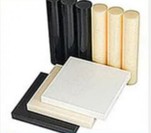
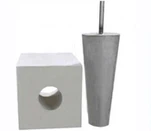
Do fire-resistant prefabricated components need to be baked? The performance difference between baking and non baking refractory prefabricated components is quite significant.
Cement bonded refractory prefabricated parts are poured with a reasonable proportion of refractory castable through molds of certain specifications and sizes. After setting, the molds are removed, and there is a certain amount of water inside the refractory prefabricated parts. If not baked, there will be differences in strength. The internal free water and crystalline water have not been fully discharged, and there is a possibility of brick decay during transportation. During use, there may also be explosions.
During use, the strength of non baked refractory prefabricated parts is not as high as that of baked ones. After being baked at 300 ℃, the moisture in the refractory prefabricated parts can be fully discharged, and there will be no explosion or secondary shrinkage during use. The fatigue resistance and wear resistance will also be enhanced.
At present, there are also non baked refractory prefabricated parts on the market, and a small number of refractory prefabricated parts are in the production process. If it is made in summer and left for a long time before being put into use, it is also possible. However, if the batch of refractory prefabricated parts is large and the pouring technology of personnel is not uniform during the production process, it is still better to perform baking. Occasionally, a large batch of bricks without baking may have quality issues, which will affect the service life of the overall kiln lining and may not be worth the loss.
Contact me:
Email:wp@cnjingganrefractory.com/sdwenping@163.com
TEL: 86-0533-4188518 / FAX: 86-0533-4188518
Rose:+86-13275332819(wechat/whatsapp number)