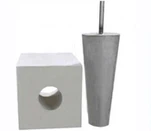
Pouring materials belong to the amorphous series of refractory materials. Due to the use of pouring methods for construction, they can also be referred to as pouring materials. They are primarily used to construct various kiln linings and other structures, and can also be used to manufacture prefabricated components. Their application role is quite ambitious.
Introduction to Types of Castable Materials
1. Classified by chemical properties into alkaline, neutral, and acidic.
2. According to the binding agents, there are chemical binding, agglutination binding, and hydraulic binding.
3. According to density, it can be divided into light and heavy.
4. According to temperature, it can be divided into low temperature, medium temperature, and high temperature.
5. According to refractory aggregates, they are divided into clay aggregates (Al2O3 30%~45%), high alumina aggregates (Al2O3% 26ge; 45%), siliceous aggregates (SiO2% 26ge; 85%, Al2O3% 26lt; 10%), alkaline aggregates (including magnesia, dolomite, etc.), and special aggregates.
Advantages Introduction
1. High strength, high wear resistance, impact resistance, erosion resistance, and oil permeability resistance; 2. Good flame retardancy, low water absorption, and resistance to high and low temperatures; 3. Good durability and long service life; 4. Simple construction, easy operation, and easy to grasp; 5. Good overall, easy to repair, and not easy to fall off; 6. Non toxic, odorless, green and environmentally friendly.
Application scale
The application scale of castables is very wide, such as the maintenance lining of various high-temperature furnaces and boilers such as cement Rotary kiln, steel ladle and other local, non-ferrous metal aluminum melting furnaces, copper smelting, fertilizer plants, calcium carbide plants and glass kilns.