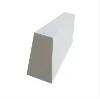
Mullite Brick is a high grade refractory material with synthetic mullite as its main crystalline phase. It delivers excellent high temperature performance, good resistance to thermal shock and strong capacity against acid alkali slag erosion. It finds wide use in linings of high temperature industrial kilns for iron and steel, glass, ceramics and fine chemical sectors.
Industrial manufacture of this brick includes two major routes, the sintering process and the fused casting process. These two routes act as core standards to tell product grades, performances and prices apart.
1. Sintering Process
Sintering Mullite Brick uses synthetic mullite clinker and high alumina bauxite clinker as aggregates. High purity fine powder, small portions of bonding clay and raw bauxite serve as binders. Workers complete precise proportioning, material mixing, high pressure forming and high temperature sintering for final goods. The sintering process brings stable output and moderate cost. Final goods own fine crystal grains, even structure and great resistance to thermal shock. They represent the largest consumption of mullite products across industries.
2. Fused Casting Process
Fused Casting Mullite Brick counts as high end mullite goods with complex production steps. Main raw materials cover high alumina bauxite, industrial alumina and refractory clay. Fine charcoal and coke particles work as reducing agents. After accurate batching, raw materials go into an electric arc furnace for melting and reduction smelting under temperature above 2000 centigrade. When raw materials achieve full melting and homogenization, workers carry out pouring forming, cooling crystallization and annealing to get finished bricks.
Compared with sintered goods, Fused Casting Mullite Brick has larger crystal grains, higher density and fewer pores. It shows better high temperature strength and slag erosion resistance, yet bears higher production cost and market price. It fits harsh high temperature conditions for glass kilns and high end ceramic kilns.
Mullite based refractories possess much better overall performance than ordinary high alumina refractory goods. Their high temperature creep behaviour exceeds high alumina bricks made from natural bauxite. Their high temperature structural stability can match premium silica based and magnesia based refractory products. They resist acid and low base molten slag far better than magnesia based refractories. With advantages of heat resistance, thermal shock resistance, slag erosion resistance and low creep, they become essential core refractory materials for medium and high grade industrial kilns.
Contact me:
Email:wp@cnjingganrefractory.com/sdwenping@163.com
TEL: 86-0533-4188518 / FAX: 86-0533-4188518
Rose:+86-13275332819(wechat/whatsapp number)