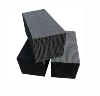
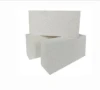
The main raw material of Fire Clay Brick is fire clay, which is mainly composed of kaolinite minerals and contains alumina, silica and other components. The alumina content in raw materials is usually between 30% and 45%, and the silica content ranges from 50% to 65%. Besides fire clay, a certain proportion of grog is added during production. Grog is calcined clay used to reduce the shrinkage of green bricks during drying and firing. A small amount of other materials may also be added occasionally to adjust properties.
Fire Clay Brick has a variety of performance characteristics. Refractoriness is a key indicator to measure the performance of refractory materials. Its refractoriness is generally between 1580℃ and 1750℃, so it can withstand high-temperature environments. The brick maintains certain mechanical strength under high temperature and can bear a certain load. Thermal shock resistance refers to the material's ability to resist drastic temperature changes. This type of brick has moderate performance in this aspect, suitable for occasions without severe temperature fluctuation. The porosity of the brick affects its thermal conductivity and erosion resistance. The porosity of this brick is normally 10% to 25%. It offers certain resistance to acid slag but weak resistance to basic slag.
Fire Clay Brick is widely used in various industrial fields. In the metallurgical industry, it serves as lining for blast furnaces, hot blast stoves, open-hearth furnaces, heating furnaces and other equipment. In the building materials industry, it is commonly applied in the construction of cement kilns, glass melting furnaces, ceramic kilns and other kilns. In the chemical industry, it is adopted in some reaction furnaces and boilers. It can also be used in civil applications such as household fireplaces and barbecue stoves. Different application scenarios have different requirements for brick performance, so proper brick types should be selected according to specific demands.
Several points need attention when using this brick. Ensure uniform joints during installation and bond bricks with special refractory mortar to prevent falling off at high temperatures. Avoid rapid temperature changes to prevent brick cracking. Inspect kiln lining regularly and replace damaged bricks timely to extend equipment service life. Keep it dry during storage to avoid performance degradation caused by moisture.
Contact me:Email:wp@cnjingganrefractory.com/sdwenping@163.com
TEL: 86-0533-4188518 / FAX: 86-0533-4188518
Rose:+86-13275332819(wechat/whatsapp number)