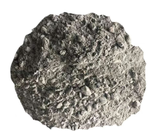
Carbon bricks are a type of carbonaceous refractory material made by mixing and shaping coke, anthracite, graphite, and tar as raw materials, and burning them in a reducing flame to 1450 ℃. The mass fraction of carbon is 88% to 90%. Capable of withstanding erosion from molten metal and various slag, but prone to oxidation. Used for masonry of blast furnace bottom and belly.
Carbon brick is a high-temperature resistant neutral refractory material product made from carbonaceous materials and added with an appropriate amount of binder. The raw materials for carbon bricks include anthracite, coke, and graphite, as well as binders for asphalt, tar, and anthracene oil. Anthracite has low volatile matter and a dense structure. When producing carbon bricks, it is often used as an aggregate, with metallurgical coke added and asphalt used as a binder.
The technical requirements for carbon bricks generally include a carbon content of ≥ 92%; Mechanical strength ≥ 25MPa; Ash content ≤ 8%. The external dimensions are strictly required, and general products need to undergo certain mechanical processing.
1. Has extremely high fire resistance
Not melting or softening. Only at very high temperatures does volatilization occur (>3000 ℃). But this temperature cannot be reached inside the blast furnace.
2. High compressive strength.
Its compressive strength can reach 250-500kg/cm2, which is similar to that of clay bricks. But the compressive strength of clay bricks can reach up to 1000kg/cm2.
3. The softening point under load is much higher than that of clay bricks. The load softening temperature of general clay bricks is 1400 ℃, while the load softening temperature of carbon bricks does not exist (i.e. the softening point is extremely high), but it must be pointed out that this is only for high-quality carbon bricks with low ash content.
4. It has good slag resistance, and except for slag with high FeO content, no slag can have an erosive effect.
5. It has high wear resistance, which is not inferior to clay bricks.
6. It is not infiltrated by iron or slag (iron slag cannot stick to carbon bricks), so there is less chance of nodule formation and damage caused by interaction with iron or slag. Therefore, in the past, carbon bricks were used to build on the furnace body, which was believed to reduce the chance of nodules (because nodules are usually generated in the furnace). However, the results showed that if the operation is not normal, nodules can still be generated in the furnace.
7. Small coefficient of expansion. This is one of the characteristics of carbon bricks, which is far inferior to other refractory materials. Even rapid cooling at high temperatures will not produce cracks, which is an essential property for some parts that are prone to damage due to cracking, such as the furnace bottom. Therefore, carbon bricks are often used to build the furnace bottom bricks.
8. Thermal conductivity is much higher than that of clay bricks, especially graphite bricks. But its effects can be beneficial or harmful. A large heat loss is a negative effect, but it is advantageous if slag skin is easily generated in the lower part. When the lower part of the blast furnace is built with carbon bricks, it can be cooled naturally using air instead of cooling water, and even some smaller blast furnace hearths do not require cooling at all. But generally, a cooling water tank is still used because sometimes the quality of carbon bricks is poor and the furnace hearth is easily damaged. Without a cooling water tank, iron slag leakage accidents may occur. At the same time, installing a cooling water tank is not very complicated. Therefore, a cooling water tank is still used when using carbon bricks.
The manufacturing of carbon bricks is generally carried out by grinding coke with very small particle size and low ash content (<10 mm), mixing it evenly with 16-18% coal tar, and then crushing it to 6 mm. Then, it is pressed into shape while reducing porosity. Finally, it is roasted in a sealed furnace for several days and nights at a roasting temperature of 1000 ℃. There should be no air gaps in this furnace; Cover the brick with sand during baking to completely isolate the brick from air and heat the brick body through conduction. The high fuel consumption and low production are the reasons for the high price of carbon bricks.
Do you want to find a professional supplier of refractory products?
Do you want to find a stable and credible supplier?
Then please contact with us
Contact me:
Email:wp@cnjingganrefractory.com/sdwenping@163.com
TEL: 86-0533-4188518 / FAX: 86-0533-4188518
Rose:+86-13275332819(wechat/whatsapp number)