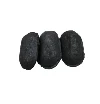
During the smelting of steel products, prolonged smelting, holding and overheating periods will cause carbon loss in molten iron. As a result, the carbon content drops and fails to hit the target theoretical value for smelting. A carbon-bearing substance needs to be added to make up for the burnt carbon loss, and this substance is the carburant.
It plays a vital role in steel smelting. Apart from helping steel reach the required carbon content, it boosts the nucleation ability of molten iron and refines grains, improving mechanical properties of castings including tensile strength, hardness, wear resistance and fatigue limit. In addition, this product optimizes the distribution of carbon and alloying elements in cast metal, yielding dense microstructure and uniform composition in castings and eliminating segregation generated in casting.
Anthracite Carburant has extensive applications across various fields. Its main uses are as follows:
Uses in iron furnaces, steel furnaces and casting processes:
1. As a reducing agent: During melting, Anthracite Carburant reduces metal oxides to metals and improves the purity and quality of metals.
2. Adjusting metal composition and properties: It tunes the composition and performance of metals to satisfy production requirements. For example, it increases the count of graphite nodules in nodular cast iron during inoculation to promote graphitization. It also provides graphite nuclei for molten iron and refines graphite nodules for more uniform distribution within the matrix.
3. For alloy preparation: It can be used to produce alloy materials. The addition of this material enhances the strength, hardness and wear resistance of alloys.
Uses in chemical reactions: It acts as a reducing agent or catalyst. In organic synthesis, it can reduce organic compounds such as ketones and aldehydes to synthesize alcohols.
Uses in other industries:
1. Production of carbon materials: Anthracite Carburant can be used to manufacture graphite, carbon black and other carbon materials widely adopted in batteries, coatings, rubber and other industries.
2. Cement manufacturing: In cement production, it works as fuel to supply heat energy and facilitate cement calcination and maturation. Meanwhile, it adjusts cement composition and characteristics to upgrade cement strength, durability and crack resistance.
Contact me:Email:wp@cnjingganrefractory.com/sdwenping@163.com
TEL: 86-0533-4188518 / FAX: 86-0533-4188518
Rose:+86-13275332819(wechat/whatsapp number)