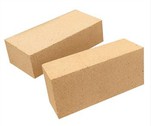
Refractory refers to the performance of refractory materials to resist high temperature without melting and softening under no load. The meaning of refractory is different from the melting point, which is the temperature at which the crystalline phase of a pure substance and its liquid phase are in equilibrium. Since refractory is generally made of
Heterogeneous solid mixtures of various minerals are melted within a certain range. The chemical composition, mineral composition, distribution of various phases, and bonding conditions of refractories have a decisive influence on their refractory degree. Various impurity components, especially those with strong flux, will seriously reduce the fire resistance of the material. Therefore, improving the purity of raw materials and strictly controlling the content of impurities are very important technological measures to improve the fire resistance of materials.
In actual use of refractories, in addition to high temperature, they are also subject to various loads and erosion by various corrosive media. The service environment is very complicated, so refractory cannot be used as the upper limit of refractory temperature. Fire resistance is the basis for judging whether a material can be used as a refractory. The International Organization for Standardization requires inorganic non-metallic materials with a refractory degree above 1500 ° C as refractory materials.
The fire resistance of refractory materials is usually expressed by the cone number of a standard temperature measuring cone. Different countries have different temperature measuring cone specifications, and the temperature represented by the cone number is also inconsistent. Common temperature measurement cones in the world include the German Segerkegel (abbreviated as SK), the international standard
The standard temperature cone (SO) of the standardized organization, the standard temperature cone (WZ) of China and the standard temperature cone (IK) of the former Soviet Union. Among them, ISO, WZ, IK are consistent, and the cone number multiplied by 10 is the temperature represented.