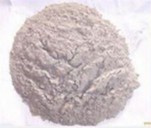
After the various raw materials of the castable are determined, the mixture is firstly prepared and then mixed to form a mixture, and some of the materials are also trapped. According to the nature of the mixture, the appropriate method is used for casting and curing, and finally the hardened structure is put into use after being properly baked.
1. The coordination of the pellets. The granular materials of various particle sizes are matched according to the principle of the closest packing.
Since the castables are mostly used to form structures with large cross sections and made of large masonry, the ultimate grain size of the granular materials can be correspondingly increased. However, in order to avoid excessive difference in expansion between the cement stone and the coarse particles during heating, and to destroy the combination of the two, in addition to selecting the low expansion granular material, the limit particle size is appropriately controlled. It is generally believed that the vibration molder should be controlled below 10~15mm. Machine molding should be less than 10mm, should not be larger than 25mm for large products or integral structures, and should be less than one-fifth of the minimum size of the section.
The ratio of the granular materials at all levels is generally 3 to 4 grades, and the total amount of pellets accounts for 60% to 70%. The powdery admixture with stable volume and high fineness at high temperature, especially the admixture of some ultrafine powder, has positive effects on the normal temperature and high temperature properties of the castable, and should be properly The amount is generally considered to be 30%~40%.
2. Determination of binding agents and coagulants. The variety of the binder depends on the nature of the structure or product, and should correspond to the nature of the selected granules and powders, as well as to the conditions of construction. When a castable composed of a non-alkaline granular material is produced, cement is generally used as a binder. Considering the requirements of the normal temperature and high temperature properties of the hardened body, try to use cement with a hard, high strength and low fusibility. The amount should be appropriate, generally should not exceed 12% to 15%. In order to avoid the reduction of the medium temperature strength of the hardened body and to improve its high temperature resistance, the amount of cement should be minimized and replaced with the admixture of ultrafine powder.
If phosphoric acid or phosphate is used as the binder, the corresponding concentration of diluted phosphoric acid and phosphate solution should be used depending on the requirements of the properties of the castable hardened body and the construction characteristics. Phosphate juice with a concentration of about 50% is generally controlled at 11% to 14%. If aluminum phosphate is used as the binder, when the Al2O3/P2O5 (molar ratio) is 1:3.2 and the relative density is 1.1, the external dosage is controlled at about 13%. The castable prepared by the binder has a low degree of coagulation hardening before heat treatment, and the strength is very low, so that an alkaline material is often added to promote solidification. If ordinary high-aluminum cement is used as a coagulant, the general addition amount is 2% to 3%.
If water glass is used, its modulus and density should be controlled. Modulus and density are important. When the modulus is 2.4~3.0. When the density is 1.36~1.40, the general dosage is 13%~15%. If sodium silicate is used as a coagulant, the amount is generally 10% to 12% of water glass. Other binders and water consumption depend on the characteristics of the materials, the properties of the hardened bodies and the construction requirements.
3. Water demand. Each castable contains moisture corresponding to the amount of binder. Water may be added after the mixture of the binder and the inert material, such as calcium aluminate cement which is easy to hydrate and has a faster coagulation speed, and is often present in this form. It may also be added in advance in the form of a certain concentration of an aqueous solution or a sol which is mixed with a binder, and a binder which can be adhesively bonded to a pre-hydrolysis is mainly carried out in this form. When the binder reacts with water and does not deteriorate, in order to make the binder uniformly distributed in the castable, it is also often mixed with water in advance, as is the case with the aforementioned phosphoric acid and water glass. Generally, for castables made of ordinary high alumina cement combined with aluminum silicate clinker, the water-cement ratio is 0.4~0.65. Among them, 0.5~0.65 is usually used for vibration molding, and the moisture of the mixture is about 8 %~10%, machine pressure molding often takes about 0.4. The moisture content of the mixture is about 5.5% to 6.5%. In order to reduce the moisture in the castable and increase the density of the hardened body, a plasticizing and water reducing agent should be appropriately added to the castable.