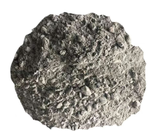
In the metallurgical industry, from iron ore sintering, coking, iron making, steel making, refining, continuous casting, to rolling steel production, refractory castables are used in almost every metallurgical furnace and thermal equipment in the production process. The inside of the large blast furnace shell is made of refractory spray paint, and the special part of the bottom of the furnace is made of refractory ramming material. The refractory spray material and refractory pressure injection material are used for repairing. The large blast furnace tapping groove has been improved from the use of alumina-silicon carbide refractory ramming material to the use of refractory castables, so that the amount of iron passing through the iron sump is significantly increased.
In addition, the blast furnace cannons are also all made of amorphous refractories. The refractory spray coating is applied to the top of the large hot blast stove and the inner side of the furnace shell. The refractory castable is generally applied to the lining of the hot blast stove of the hot blast stove. The lining of the hot air duct of the hot blast stove and the blast furnace mostly adopts the refractory castable. Ignition furnaces, holding furnaces and large pharyngeal linings for iron ore sintering use refractory plastics, refractory castables and refractory spray coatings.
In the aspect of steelmaking, there are many applications of refractory spray materials, and the application of the refractory material lining the steel drum is also obviously increased, which has gradually become the focus of development and application. In continuous casting, it is used as a continuous casting intermediate tank liner and a slag retaining plate. Unshaped refractory materials are also used in whole or in part in the immersion tube, the integral spray gun, and the vacuum degasser for refining outside the furnace. The unshaped refractory materials in the soaking furnace and the heating furnace for rolling steel production are the most widely used and the most effective, and the refractory plastics and castables are used for the water-cooling tube wrapping of the heating furnace to obtain a good energy-saving effect. In the coking, the main use of refractory mud, in addition, is also used in the coke oven lining and coke oven door, flue, resistance wall and other parts.
In the non-ferrous metallurgical industry, amorphous refractories are mainly used in electrolyzers, lead-zinc closed blast furnaces, aluminum reverberatory furnaces, copper-plated power frequency induction furnaces, copper-smelting flash furnaces, anode furnaces, electrode furnaces, converters and other important equipment.
Other industrial aspects
The amorphous refractory material is used in various induction furnaces, salt bath furnaces, heat treatment furnace linings and the like in the mechanical industry. In the energy chemical industry, it is used in gas generators, shale dry distillation furnaces, atmospheric pressure furnaces, vacuum furnaces, one-stage and two-stage reformers of ammonia plants, and exhaust pipes. In addition, it is also used in general industrial boilers, power plant boiler linings, etc. In the building materials industry, it is mainly used in certain parts of cement rotary kiln linings and glass melting furnaces.