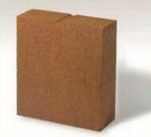
Foam ceramic filter is the third generation porous ceramic product after ordinary porous ceramics and honeycomb porous ceramics. It has three dimensional connection network skeleton and through hole. Its porosity is high, up to 70-95%, and its specific gravity is small, only 0.3 -0.6g. /At the same time, it also has the characteristics of low resistance, high strength, high temperature resistance, corrosion resistance, good thermal shock resistance and excellent filtration adsorption performance.
According to different needs, foam honeycomb ceramics can be made of alumina, zirconia corundum mullite, mullite and cordierite and other materials, widely used in metallurgy, casting, chemical industry, environmental protection, light industry, food and other industries. Its specific applications are: foam honeycomb ceramics can be applied to molten metal liquid filtration, can effectively remove the oxide inclusions in the melt, and purify the melt, resulting in this The surface defects such as black spots, sand holes and air holes of the products such as cast rolling, casting bars and castings are obviously reduced, the smoothness of the products is obviously improved, and the grade and quality of the products are greatly improved. Foam honeycomb ceramics can be applied to filter and purify inclusions in high temperature alloy, so that the inclusion weight, total oxygen content and the number of inclusions on the unit area can be significantly reduced, so as to improve the quality of alloy and castings. In addition, foam honeycomb ceramics can also be made into other kinds of chemical filters, metal melt filters, gas filters, catalyst carriers, photo heat exchangers, solid heat converters, on-line mixers, dispersing pipes, thermal insulation regenerator and other products, and used as packing materials in contact reaction towers and gas absorption towers.
Filtration mechanism of foam ceramic filter:
Rectifying effect: after placing the foam ceramic filter in the casting system, the resistance of the metal liquid flow increases, the liquid metal changes the flow state in the casting system, and the liquid flow can flow slowly into the mold cavity along the casting system, so that the eddy current is not easy to generate, so that the liquid metal is changed from turbulent flow to laminar flow, and the mold filling is stable, and the slag blocking function of the casting system is played.
Mechanical screening: there are a large number of oxide inclusions, slag and other large impurities in liquid metal. A large number of inclusions can be sieved by mechanical means by selecting suitable pore size foam ceramic filters.
Filter cake mechanism: the foam ceramic filter can efficiently block the slag because of its three-dimensional mesh structure. Many impurities larger than the filter hole are trapped at the entrance of the filter screen. With the increase of the number of trapped inclusions, a "filter cake" composed of large inclusions is formed on the surface of the inlet of the filter screen. The filter cake makes the fluid flow fine, so that the inclusions smaller than the mesh size of the filter screen are partly captured on the "filter cake", and some residues that cannot float up can be blocked by the filter screen. The blocked residue itself has a filtering function, namely bidirectional filtration.
Adsorption mechanism: foam ceramic filter has a large surface area, which is conducive to adsorbing a large number of tiny inclusions. Due to the attraction of the melt, the liquid is separated by the metal mesh. This kind of adsorption is mainly non selective multi molecular layer physical adsorption, so that inclusions adhere layer by layer on the filter frame until it is blocked.