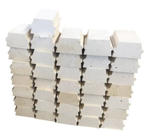
The main chemical component of ceramic fibers is aluminum silicate, which is a fibrous lightweight refractory material. According to its mineral composition, it can be divided into two categories: glassy fibers and polycrystalline fibers. Glass fiber is an amorphous solid fiber formed by a molten liquid state during cooling; Polycrystalline fibers are often formed by colloidal spraying (or spinning) and high-temperature calcination. Ceramic fiber products are widely used as insulation and high-temperature resistant materials in various thermal kilns. Due to their significantly lower capacity compared to other refractory materials, they have very little heat storage and obvious insulation effect. As lining materials, they can greatly reduce energy loss in thermal kilns, bringing a revolution in energy conservation for thermal kilns. On the other hand, its application technology and methods have also brought a revolution to the masonry of thermal kilns.
Current usage status
Ceramic fibers first appeared in 1941, when the American companies Babu and Wilcox melted and blown natural kaolin into fibers using an electric arc furnace. In the late 1940s, two American companies produced aluminum silicate series fibers, which were first applied in the aviation industry; In the 1960s, the United States developed various ceramic fiber products and used them for industrial kiln wall lining. In the 1970s, ceramic fibers began to be produced and used in China, and their application technology was rapidly promoted in the 1980s. However, their main temperature range was below 1000 ℃, and the application technology was relatively simple and backward. After entering the 1990s, with the promotion and application of zirconium containing fibers and polycrystalline alumina fibers, the operating temperature increased to 1000 ℃ to 1400 ℃. However, due to product quality defects and outdated application technology, the application fields and methods were limited. Polycrystalline alumina fibers cannot be made into fiber blankets, and the product specifications are single, mainly consisting of loose cotton and fiber blocks. Although the temperature is increased, the strength is poor, which limits the range of use and shortens the service life.
Zirconium containing fiber is a widely used and low-cost aluminum silicate fiber produced by the melting method. It can be widely used as a full fiber lining for the hot surface of various thermal kilns. Currently, the quality and application development of domestic products in this area are relatively backward. Chromium containing fiber has appeared abroad, with a higher operating temperature than zirconium containing fiber, but there are no reports in this area in China.
Contact me:
Email:wp@cnjingganrefractory.com/sdwenping@163.com
TEL: 86-0533-4188518 / FAX: 86-0533-4188518
Rose:+86-13275332819(wechat/whatsapp number)