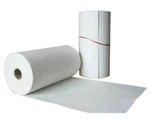
The low cement castable is made up of refractory aggregate, high aluminum powder and binder in a certain proportion, which is prefabricated and baked to become a refractory with good performance. It is very suitable for the use conditions of heating furnace.
The original furnace used a large number of ordinary clay brick masonry, some parts still need to be processed, resulting in poor integrity of the masonry, masonry strength reduction. In particular, debris such as bricks fall into the gap between the trolley and the side wall, and the side wall is often scratched when the trolley enters and exits, which causes serious damage to the furnace wall. In addition, when the masonry under the arch foot of the furnace top is used for a long time, it inclines inward to produce a gap, and the flame directly burns the arch foot beam, which causes great damage to the furnace body, so it is often repaired. The service life of the furnace is about one year, which increases the maintenance cost and affects the normal production of the hydraulic press.
The lining of the trolley type heating furnace adopts the anchoring brick structure, and the top of the furnace is in the form of flat roof hanging. According to the size of the furnace, the tire mold is set up on site, and the furnace body refractory materials are put into use after being baked. The low cement castable not only overcomes the low strength of ordinary castable at room temperature, but also makes up for the defect of the poor strength of ordinary castable at medium temperature. It uses ultra-fine powder and high-efficiency admixture to reduce the amount of cement and water, improve the pore structure to make it uniform and improve the strength. The material has the characteristics of impermeability and erosion resistance, impact and wear resistance, and good mechanical properties, and has a wide application field.
With the continuous development of refractory technology, foreign enterprises build kilns by splicing prefabricated blocks and building blocks. Many domestic enterprises also adopt this method. The advantage of this method is that the refractory prefabricated blocks are produced and baked in the refractory plant, installed directly at the use site, which greatly shortens the construction period and avoids the drying process. Especially for the use of hanging furnace beam, the hanging parts on the top of the furnace are all cancelled, only this item * saves 1 / 5 of the cost of building the furnace. When a brick is burnt out in the use process, the furnace can be stopped for a short time * it can be replaced, greatly improving the use efficiency of the furnace, and the economic benefit is very obvious.