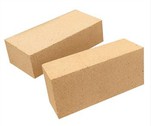
When laying refractory bricks, it is necessary to prevent the following common problems:
(1) Misalignment: that is, unevenness between layers and layers, between blocks and blocks;
(2) Skew: that is, not horizontal in the horizontal direction;
(3) uneven ash seam: that is, the width of the ash seam is different, which can be adjusted by moderately selecting bricks;
(4) Climbing: that is, there is a regular unevenness on the outer surface of the ring wall, which should be misaligned within 1mm;
(5) Separation: that is, the refractory brick ring is not concentric with the casing in the curved masonry;
(6) Heavy seam: the upper base gray joints are superimposed, and only one gray joint is allowed between the two layers;
(7) Through seam: that is, the horizontal layer of gray seams in the surface, even the exposed metal shell, is not allowed;
(8) Open mouth: that is, small and large inside the gray joint in the curved masonry;
(9) Evacuation: that is, the mortar is not full between the layers, between the bricks and between the shells, and is not allowed in the fabric of the stationary equipment;
(10) Hair seam: that is, the brick joint is not hooked, and the wall surface is not clean;
(11) Snake bend: that is, the longitudinal joint, the annular seam or the horizontal joint is not straight, but is curved in a wave shape;
(12) Masonry drum kit: due to the deformation of the equipment, the relevant appearance of the equipment should be smoothed during the masonry. When the double-layer fabric is built, the insulation layer can be leveled;
(13) Refractory mixed pulp: Misuse of mud is not allowed.