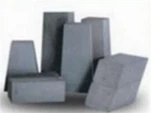
1) Refractory fiber
Refractory fiber, also known as ceramic fiber, is a type of artificial inorganic non-metallic material, which is a glass or crystalline binary compound mainly composed of AL2O3 and SiO2. As a lightweight refractory insulation material used in industrial furnaces, it can save 15-30% energy. Refractory fibers have the following good characteristics:
(1) High temperature resistance. The usage temperature of ordinary aluminum silicate refractory fibers is 1200 ℃, while the usage temperature of special refractory fibers such as alumina fibers and mullite can reach up to 1600-2000 ℃. However, the refractory temperature of general fiber materials such as asbestos and rock wool is only about 650 ℃.
(2) Thermal insulation performance. The thermal conductivity of refractory fibers is very low at high temperatures. The thermal conductivity of ordinary aluminum silicate refractory fibers at 1000 ℃ is one-third of that of lightweight clay bricks, and their thermal capacity is small, with high insulation efficiency. The thickness of the designed furnace lining can be reduced by about half compared to using lightweight refractory bricks.
(3) Chemical stability. Except for strong alkalis and hydrofluoric acid, it is almost unaffected by any chemicals, vapors, or oils. It does not react with acids at room temperature and does not wet molten aluminum, copper, lead, and their alloys at high temperatures.
(4) Thermal shock resistance. Refractory fibers have soft and elastic properties, good resistance to thermal shock and sudden heat and cold. The influence of thermal stress may not be considered in the design of refractory fiber furnace lining.
In addition, the insulation and sound insulation properties of refractory fibers are also relatively good. For sound waves ranging from 30 to 300Hz, its sound insulation performance is superior to commonly used sound insulation materials.
2) Refractory fiber products
Loose refractory fiber raw cotton is processed through secondary processing to form fiber secondary products, which can be divided into hard products and soft products. Hard products have high strength and can be processed by machinery such as turning and drilling; Soft products have great resilience and can be compressed, bent without breaking, such as refractory fiber felt, blankets, ropes, belts, etc.
Contact me:Email:wp@cnjingganrefractory.com/sdwenping@163.com
TEL: 86-0533-4188518 / FAX: 86-0533-4188518
Rose:+86-13275332819(wechat/whatsapp number)