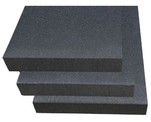
Unshaped refractory material is a refractory material composed of refractory aggregate with a certain particle size distribution, powder, binder, and admixture, also known as dispersed refractory material. Used for lining of thermal equipment, directly baked without going through the firing process. Compared with fire-resistant bricks, it has the characteristics of simple process (eliminating the firing process), energy saving, low cost, and easy mechanized construction.
There are three aspects to the performance of Asian refractory materials:
(1) Mechanical properties. Such as compressive strength and flexural strength.
(2) Chemical properties. Such as slag resistance and reaction with controllable atmosphere.
(3) Physical performance. Such as bulk density, fire resistance, load softening temperature, thermal expansion rate, rate of change in reburning line, thermal shock stability, thermal conductivity, and specific heat capacity. Based on the purpose of refractory materials, starting from a comprehensive comparison of various required properties, select several types of refractory materials, and finally confirm them based on investment and economic benefits.
The workability of amorphous refractory materials refers to the comprehensive performance that measures the difficulty of the construction operation of amorphous refractory materials. Good workability, which means that amorphous refractory materials can be mixed, transported, poured, compacted, sprayed and other construction processes in a relatively labor-saving manner, achieving stability and density when finally formed.
The quality of workability directly affects the efficiency and quality of construction, and it is generally believed that workability includes the comprehensive performance of four properties: fluidity, plasticity, stability, and compactness of the mixture.
1. Flowability: It depends on the proportion of solid-liquid phase in the mixture, and usually increases with increasing water content, resulting in an increase in flowability.
2. Plasticity: refers to the ability to produce plastic deformation without "brittle fracture" under a certain external force, which is related to the water cement ratio and the content of cement slurry or binder.
3. Stability: refers to the shear stress generated by the gravity of the aggregate in the mixture, which does not exceed the yield stress of the "liquid phase". A stable mixture makes it difficult for the aggregate particles to layer and bleed according to size.
4. Tightness: refers to the ability of a mixture to overcome internal and surface resistance and achieve complete compaction during vibration or compaction.
The four requirements for the workability of amorphous refractory materials mentioned above may conflict with each other in different situations. Stability requires the mixture to have high cohesion to reduce the sinking and bleeding of coarse aggregates, while compactness requires the mixture to have low cohesion and internal friction to make compaction easier. Therefore, the workability of the mixture should be determined according to the needs of different occasions.
Contact me:
Email:wp@cnjingganrefractory.com/sdwenping@163.com
TEL: 86-0533-4188518 / FAX: 86-0533-4188518
Rose:+86-13275332819(wechat/whatsapp number)