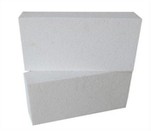
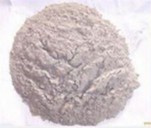
With the continuous advancement of China's cement industry, it has developed rapidly in recent years, and refractory bricks have also made rapid progress in performance, advantages and characteristics compared with the previous ones. Regardless of the traditional refractory bricks, or the refractory bricks that have been treated by special processes to date, one of the problems that people always care about is the construction of refractory bricks. Let's discuss the construction methods of refractory bricks and some problems to be noted.
1. Refractory bricks require that the joints are full of pulp, and the width of the brick joints should meet the design requirements of the drawings.
2. After each refractory brick is placed, it must be hammered with a wooden hammer or a rubber mallet to extrude more than the fire mud. It is necessary to ensure that the brick joint is completely in close contact with the shell. The refractory bricks should be in surface contact and firmly combined. When hitting the refractory bricks, it is necessary to prevent undesired knocking or crushing of the refractory bricks or damage to the refractory mud which begins to solidify.
3. Before the brick refractory mud is not completely hardened, the excess fire mud should be scraped off. If some places need to fill the refractory mud, use the scraper to fill the new fire mud, that is, the masonry joint.
4. The gray joint should be horizontal and vertical, the arc surface is flat, and the joint is tight. The size of the masonry should be the same as that indicated by each equipment.
5. Straight walls are made of staggered joints. The arches and kiln should be made of straight through joints in the direction of the circumferential ring. The masonry adaptability is to make the brick seam smooth and smooth. The geometry of the masonry should conform to the drawing requirements to ensure quality.
6. Metal parts such as bricks and flanges should not be in direct contact with refractory bricks. The device should be filled with refractory mud, and about 10mm expansion joints should be left under the bricks. A refractory fiber felt can be inserted into the expansion joint to protect the pallet. Flanges and metal parts can be closed with refractory mud to prevent metal parts from coming into contact with hot gases.
7. During the process from construction to production, the masonry should be protected from moisture and freezing, and too high temperature should be prevented from occurring too early, so that the refractory mud can not reach the required strength.