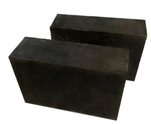
The refractory brick small class has started classes again. Dear babies, today's Xiaobian is about magnesium refractory bricks.
Magnesia refractory bricks are the most commonly used refractory bricks for rotary kiln linings, such as magnesium aluminum spinel bricks, magnesium iron spinel bricks, magnesia chrome bricks, and the like. Enterprises should pay attention to the following six aspects when choosing magnesium refractories:
1 Pay attention to moisture: Magnesia bricks have poor moisture resistance and are damaged by moisture deterioration. The magnesia bricks should be placed in a dry place and covered with crepe. The storage capacity is not expired. It is best not to burn magnesia bricks in the south in the rainy season for less than 3 months, and in the north for no more than half a year, the sintered magnesia bricks can be slightly longer. Prevent throwing and avoid collision during handling.
2 The firing zone is preferably a magnesium brick that is consistent with the expansion of the cylinder to avoid large stresses in the magnesium brick and to burst.
3 Because the thermal expansion rate of magnesia bricks is about twice as high as that of clay bricks and high-alumina bricks, appropriate brick joints are left when bricklaying to prevent expansion and cracking when the temperature rises. The width between the brick and the brick is 2~3mm, and the width between the circle and the circle is 5~6mm.
4 When the kiln and the ignition are ignited, the thermal shock stability of the magnesia brick is poor, and the thermal expansion coefficient and thermal conductivity are both large. In order to prevent the temperature from rising too fast, the fire brick bursts, and there is a corresponding drying system, that is, the drying rate of the drying furnace is slow, preferably. Take 120 °C / h, the fastest does not exceed 200 ~ 250 ° C / h, and the moisture in the kiln lining is completely dried, and then the coal is gradually heated.
5 Hang the kiln skin 'protect the kiln skin' to avoid the red brick kiln.
6 Do a good job of temporary insulation kiln insulation, magnesium brick thermal shock stability is poor, when temporarily stopping the kiln repair equipment or rushing to repair other parts of the refractory brick, the two winds must be turned off, so that the temperature in the kiln gradually decline, especially when the kiln skin "Not very good or when there is a brick, it is more important to keep warm. If you plan to stop the kiln, you can make up the "kiln skin" in advance to protect the magnesium brick.