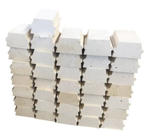
The introduction of refractories and the explanation of their testing contents
There are many kinds of refractories, usually divided into ordinary refractories, advanced refractories and super refractories according to the fire resistance, acid refractories, neutral refractories and alkaline refractories according to the chemical characteristics. Do you want to know more about them? The following is about the introduction of "the classification of refractories and the explanation of their testing contents".
*current main types of refractories and other refractories
The testing range of refractories includes all kinds of refractory raw materials, dense shaped refractory products, shaped heat insulation refractory products, unshaped refractory materials, fireproof materials, refractory fibers and thermal insulation products. The specific products are as follows:
Firebrick: high alumina firebrick, silica firebrick, clay firebrick
Refractory mud: Clay refractory mud, high alumina refractory mud, silica refractory mud, refractory castable
Fire resistant concrete: fire resistant mud, hydraulic, fire-resistant and air-resistant concrete
Diatomite material: diatomite refractory insulating brick, plate, tube, diatomite powder
Other refractories: silicon refractories, clayey refractories, high alumina refractories, alkaline refractories, refractory cotton, water glass acid resistant materials, Liuhuang corrosion-resistant materials, carbon refractories, acid resistant ceramic products, carbon products and special refractories, clay and high alumina fire-resistant plastics, fire-resistant fibers and insulation products.
*The main testing items of refractories include:
1. Structural properties: porosity, bulk density, water absorption, air permeability, pore size distribution, particle bulk density, apparent porosity, true density, compressive strength, linear expansion, linear shrinkage, particle size, slag resistance, etc;
2. Fire rating: fire resistance, ignitability, smoke toxicity, smoke density, heat release and smoke; fire resistance, combustion performance, combustion heat value, fire resistance, high temperature resistance, fire rating test;
3. Thermal properties: thermal conductivity, coefficient of thermal expansion, specific heat, heat capacity, thermal conductivity, thermal emissivity, thermal shock stability, etc;
4. Mechanical properties: compressive strength, tensile strength, flexural strength, torsional strength, shear strength, impact strength, wear resistance, creep, bond strength, elastic modulus, hot compression rate, melt index, extrusion joint test, etc.
the main testing items of refractories are as follows]
There are mainly four kinds of unshaped refractories: refractory castable, chrome coating, high temperature micro expansion refractory plastic and light heat preservation castable, etc. to check whether their bulk density, compressive strength, flexural strength, thermal shock stability, fire resistance and thermal conductivity meet the specification requirements.
*The testing range of refractories includes all kinds of refractory raw materials, dense shaped refractory products, shaped heat insulation refractory products, unshaped refractory materials, fireproof materials, refractory fibers and thermal insulation products. The specific products are as follows:
Firebrick: high alumina firebrick, silica firebrick, clay firebrick
Refractory mud: Clay refractory mud, high alumina refractory mud, silica refractory mud, refractory castable
Fire resistant concrete: fire resistant mud, hydraulic, fire-resistant and air-resistant concrete
Diatomite material: diatomite refractory insulating brick, plate, tube, diatomite powder
Other refractories: silicon refractories, clayey refractories, high alumina refractories, alkaline refractories, refractory cotton, water glass acid resistant materials, Liuhuang corrosion-resistant materials, carbon refractories, acid resistant ceramic products, carbon products and special refractories, clay and high alumina fire-resistant plastics, fire-resistant fibers and insulation products.