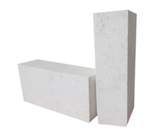
Ramming material is a refractory material constructed by ramming. Under the same raw material, its density is not as high as that of refractory castable
Refractory ramming material is made up of granular material with high proportion, binder with low proportion and other components, and even all of them are composed of granular and powdery materials, which need to be rammed by strong force.
What is ramming material?
The ramming material is made of silicon carbide, graphite and electric calcined anthracite as raw materials, mixed with a variety of superfine powder additives, and electric melting cement or composite resin as binder. It is used to fill the gap between furnace cooling equipment and masonry or filling material for masonry leveling layer. Ramming material has good chemical stability, erosion resistance, wear resistance, peeling resistance, heat shock resistance, widely used in metallurgy, building materials, non-ferrous metal smelting, chemical industry, machinery and other manufacturing industries!
Selection of binder for ramming materials
The selection of binder should be appropriate, some do not need binder, some only add a small amount of flux. Sodium silicate, ethyl silicate, silica gel and other binders are commonly used for acid ramming materials, among which borate is commonly used for dry ramming materials; chloride and sulfate of magnesium are commonly used for alkaline ramming materials; organic compounds and temporary binders with high carbon content that can form carbon bond at high temperature are also often used. The dry ramming material is added with a proper amount of flux containing iron. Chrome ramming material is commonly used as awn pin.
After ramming, different heating methods can be adopted to promote the hardening and sintering of the mixture according to its hardening characteristics. If there are inorganic chemical binders, the mold can be removed and baked after self hardening to a certain strength; if there are thermoplastic carbon binders, they can be demoulded after cooling to a certain strength, and they should be quickly heated to coking before use; if there are no binders hardened at room temperature, they are often sintered with mold after tamping.