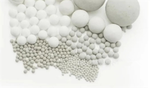
Magnesia dolomite brick is magnesia calcium brick. The main raw materials are magnesia dolomite sand, dolomite sand and magnesia. The binder is anhydrous binder, such as paraffin. When the product is burned, the paraffin burns and emits flue gas. If the temperature rise and pressure are not properly controlled, it will cause billet cracking. When magnesia dolomite brick is fired in tunnel kiln, the heating speed in the pre heating zone should be accelerated, and the products should be vacuum thermoplastic packaged after leaving the kiln.
Magnesia dolomite brick has good high-temperature performance, and the load softening temperature is above 1700 ℃, but the disadvantage is that the high-temperature reheating linear shrinkage rate is large. When the temperature is greater than 1750 ℃, it is easy to produce brick joint steel penetration when the furnace cools down.
Magnesium dolomite brick is more stable than magnesium brick and magnesium chromium brick under vacuum. As long as MgO contains 10-20% Cao, the relative volatilization of MgO can be greatly reduced. Another advantage of 20% Cao is that it can remove calcium from the brick, which is beneficial to the desulfurization of steel. Magnesia calcium brick does not pollute molten steel and is easy to remove impurities in molten steel, which is conducive to improving the purity of steel.
The biggest feature of the product is easy hydration. In the process of manufacturing, transportation, storage, masonry and use, contact with water and steam should be avoided. It is widely used in out of furnace refining furnaces, such as AOD and VOD furnaces, and is more and more widely used in large cement kilns.