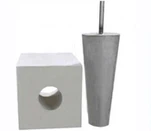
(1) Anchor nail welding. Use a pistol style welding gun to clamp the anchor pin with the matching anchor pin chuck, and weld it to the water-cooled beam (column) at the designed spacing.
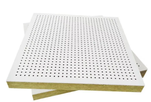
(2) Ceramic fiber felt wrapping and surface treatment. Wrap the pre processed block shaped ceramic fiber felt around the corresponding water-cooled beam (column), tightly wrap the ceramic fiber felt around the water-cooled beam (column) with z2 galvanized iron wire in a spiral shape, and then spray hardening agent on the surface of the ceramic fiber felt. Wait for it to dry and harden, forming a hard shell on the surface of the felt before pouring construction can be carried out
(3) Template installation. To ensure the shape of the lining wall after pouring and the reuse of the formwork, a 4mm thick steel plate is used to make a standardized steel formwork. The steel formwork should be installed from bottom to top, and the lower end of the installed formwork should be clamped onto the already poured lining wall.
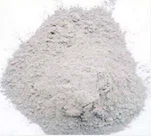
(4) Mixing of low cement castables. A forced mixer must be used for mixing, clean water should be used, and the water temperature should be between 10-25 ° C. The ingredients and water should be added strictly according to the mixing ratio provided in the material manual; To overcome the uneven particle size distribution of dry aggregates during transportation; Dry mix for 1 minute before adding water and stirring for 4-5 minutes
(5) Pouring. The mixed castable is quickly transported to the pouring site and poured into the mold using a small shovel and a specially designed hopper. When pouring beams, the material should be cut from one side of the formwork to prevent gaps from forming at the bottom of the beam. When cutting, it is necessary to prevent the wrapped ceramic fiber felt from being broken or falling off. After filling the material, start the vibrator to vibrate and the material surface sinks. Add the material in a timely manner, and when the pouring material surface is no longer
When sinking or surface bleeding without bubbles escaping, the vibration can be stopped, and the vibration time is generally 2 minutes
After the vibration of the column casting material, the surface is not repaired. After the vibration of the beam casting material, an iron trowel is used to scrape and shape it before the initial setting of the material, so that the cross-section of the lining wall of the casting material on the upper part of the beam meets the design requirements.
(6) Demoulding and repairing: When the temperature inside the furnace is between 10-25 ° C, the formwork can be removed 8 hours after pouring, and the poured material will naturally cure after demoulding. The pouring quality should be checked in a timely manner. General defects should not be treated, but important parts and larger problems should be repaired to ensure that the lining wall meets the production process requirements.
Contact me:
Email:wp@cnjingganrefractory.com/sdwenping@163.com
TEL: 86-0533-4188518 / FAX: 86-0533-4188518
Rose:+86-13275332819(wechat/whatsapp number)